Why Simulation Training Works Better Than Lectures for Resuscitation Skills
Knowing the steps of resuscitation is one thing. Performing them during a cardiac arrest is another. Healthcare professionals need to make quick decisions, communicate clearly and respond to unexpected situations, often under pressure.
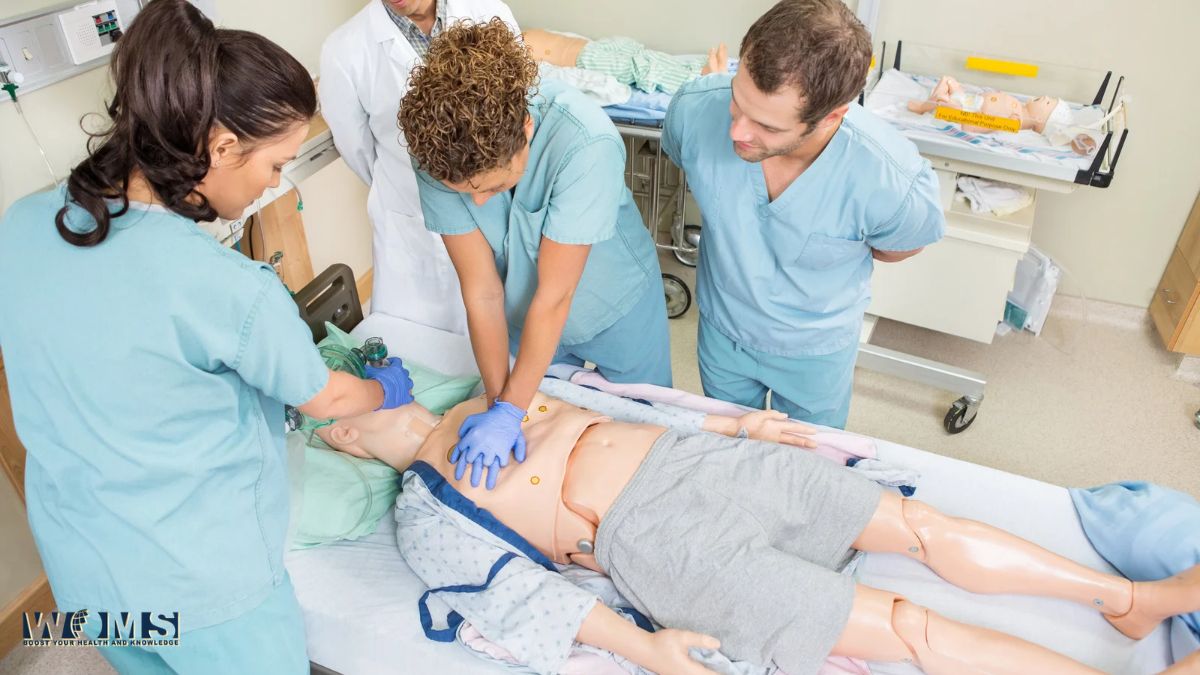
Simulation-based training helps bridge this gap by giving healthcare professionals the chance to practise realistic emergencies. Providers such as ALS by Parasol use practical scenarios to help participants apply their knowledge, build confidence and develop the skills needed to respond effectively.
The Problem With Lecture-Based Learning
Traditional resuscitation courses often start with classroom lectures covering treatment guidelines, medication protocols and how to recognise different heart rhythms. Participants then move on to practical sessions using manikins to practise what they’ve learnt.
The main challenge is remembering and applying that knowledge. Research shows that resuscitation knowledge and practical skills can decline over time, particularly when healthcare professionals don’t have regular opportunities to practise. Someone who completes a course may not encounter a cardiac arrest for several months, making it harder to recall every step when it matters.
Lectures also can’t fully prepare healthcare professionals for the pressure of a real emergency. It’s one thing to learn when adrenaline should be given. It’s another to make that decision while checking a patient’s heart rhythm, coordinating chest compressions and communicating with the team.
Classroom learning provides the foundation, but practical training gives participants the opportunity to make decisions, respond to changing situations and apply their knowledge under pressure.
What Simulation Training Does Differently
Simulation-based training gives healthcare professionals the opportunity to practise resuscitation in realistic emergency scenarios. Instead of simply learning the steps, participants work with manikins, monitor heart rhythms, operate defibrillators and make treatment decisions as part of a team.
It Helps Healthcare Professionals Make Decisions Under Pressure
During a simulated cardiac arrest, participants need to monitor the patient’s condition, communicate with colleagues and decide what to do next. They may need to recognise a change in heart rhythm, prepare for defibrillation or administer medication while other team members continue CPR.
Although a simulation cannot fully recreate the pressure of a real emergency, it allows participants to practise managing several tasks at once. With repeated practice, they can become more confident in making decisions and responding to unexpected situations.
It Improves Practical Skills Through Repetition
Resuscitation involves physical skills that need regular practice. These include chest compressions, bag-mask ventilation, operating a defibrillator and managing a patient’s airway.
Watching an instructor demonstrate these techniques is useful, but performing them helps participants develop the correct movements and timing.
Simulation sessions allow healthcare professionals to practise these skills, receive feedback and correct mistakes. Repeated practice can also help them maintain their skills between training sessions.
It Identifies Gaps in Knowledge and Skills
Someone might understand the cardiac arrest algorithm but still struggle to apply it during an emergency. For example, they may hesitate when a patient’s heart rhythm changes, forget to delegate tasks or become unsure about when to administer medication.
These challenges are harder to identify through lectures or written assessments alone.
Simulation allows instructors to observe how participants respond to different situations and identify areas that need improvement. They can then provide specific feedback and give participants another opportunity to practise before facing similar situations in clinical settings.
The Role of Debriefing
Debriefing is an important part of simulation-based training. After each scenario, the instructor reviews what happened with the team, discusses the decisions made and explains what participants could do differently next time.
A typical debriefing session covers four key questions:
- What happened? The team reviews the scenario, including the actions taken and how the patient responded.
- What went well? The instructor highlights correct decisions, effective communication and skills performed properly.
- What could be improved? Participants identify areas where they hesitated, missed a step or could have responded more effectively.
- Why did it happen? The team discusses what influenced their decisions, including gaps in knowledge, communication or teamwork.
Debriefing also helps improve how healthcare professionals work together during emergencies. For example, a team leader might forget to communicate the treatment plan, or someone performing chest compressions might not tell the team when they’re getting tired.
By discussing these situations after the simulation, participants can understand what went wrong and practise better ways to communicate and coordinate their actions. This helps prepare the team to work more effectively during a real cardiac arrest.
How Technology Has Improved Simulation Quality
Early simulation training used basic manikins with limited feedback. The instructor had to manually announce vital signs, simulate rhythm changes verbally, and imagine the clinical response. The gap between the simulation and reality was wide.
Modern simulators have closed that gap significantly. High-fidelity manikins produce palpable pulses, chest rise during ventilation, and realistic airway anatomy. Devices like the iSimulate REALITi platform turn a tablet into a fully functional patient monitor that displays real-time rhythms, vital signs, and waveforms. The instructor controls the scenario from a separate device, adjusting the patient’s condition in response to the team’s actions.
This level of realism means candidates practise on equipment that looks and behaves like what they will use in a real resuscitation. The transfer from simulation to clinical practice is more direct, and the skills developed during training are more likely to hold up when it matters.
The technology also enables structured assessment. Instructors can replay a scenario from a recording, point to a specific moment on screen, and ask the team why they made a particular decision. That level of granularity was impossible with a basic manikin and a verbal narrative.
What the Evidence Shows
Research comparing simulation-based ALS training with lecture-based formats consistently favours simulation on three measures:
Skill retention. Candidates trained through simulation retain procedural skills for longer. A 2019 systematic review published in the journal Resuscitation found that simulation-based training improved both knowledge retention and clinical performance at six-month follow-up compared with traditional instruction.
Team performance. Simulation-trained teams demonstrate better communication, faster time to first shock, and fewer protocol deviations during assessed scenarios.
Confidence. Candidates report higher confidence in their ability to manage a cardiac arrest after simulation-based courses, which correlates with faster decision making in real clinical situations.
Error recognition. Teams trained through repeated simulation are quicker to identify when a protocol deviation has occurred and correct it mid-scenario. This self-monitoring ability develops through practice, not instruction.
Conclusion
Simulation-based training gives healthcare professionals the opportunity to practise resuscitation skills in realistic situations rather than relying on classroom learning alone. While theory provides the foundation, hands-on practice helps participants improve their decision-making, teamwork and confidence. Combining pre-course learning with practical simulations and feedback can better prepare healthcare professionals to respond effectively during a real cardiac arrest.