How Software Is Changing Healthcare and Creating New Safety Challenges
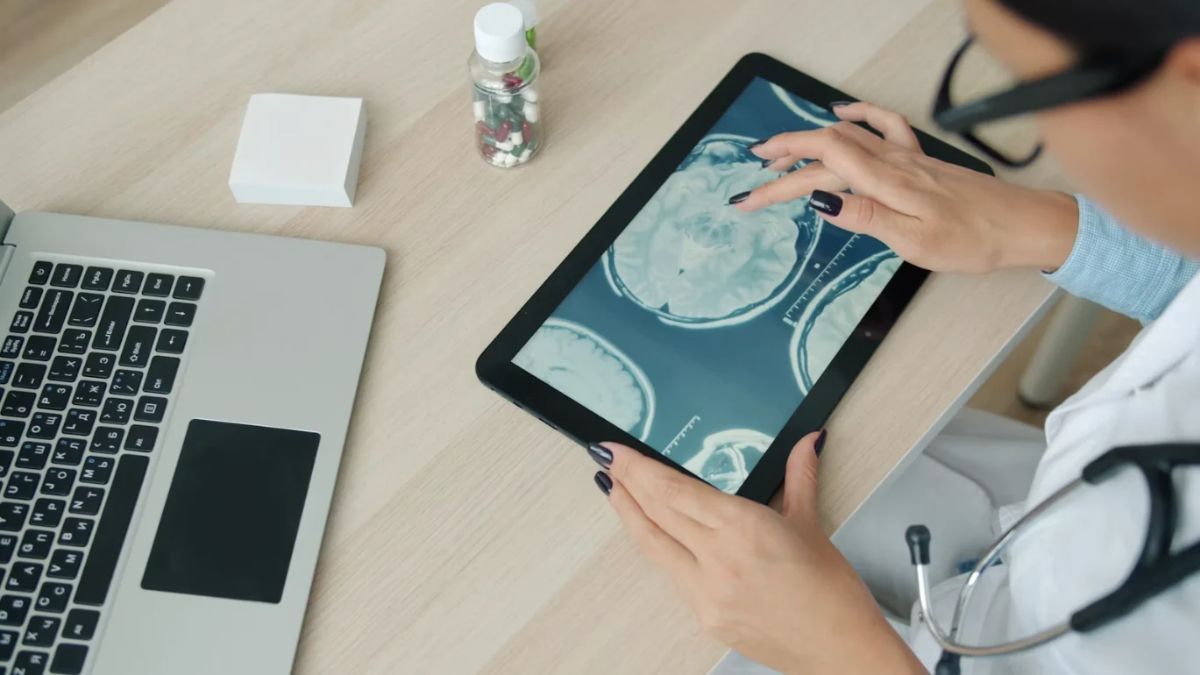
Healthcare increasingly depends on software.
A patient books an appointment through an online platform. Their medical history is stored in an electronic health record. A clinician uses software to review laboratory results. An algorithm may help interpret an image. Connected equipment monitors the patient, while another system sends information to a hospital database.
Many of these processes happen without the patient ever thinking about the technology behind them.
But greater dependence on software introduces an important question: what happens when that software is wrong?
A website error may be frustrating. A software error that changes clinical information, interrupts patient monitoring, or influences a treatment decision can have very different consequences.
As healthcare becomes more digital, software safety is therefore becoming part of patient safety.
Healthcare Is Becoming a Software-Dependent Environment
Software was once primarily used to support administrative healthcare tasks.
It helped hospitals schedule appointments, manage billing, store records, and coordinate staff.
Today, its role extends much further.
Software can influence diagnosis, calculate medication doses, monitor physiological signals, prioritise patients, control medical equipment, support remote consultations, and identify patterns in clinical data.
This creates enormous opportunities.
Healthcare professionals can access information faster. Patients can receive care without travelling to a clinic. Large amounts of clinical data can be analysed in ways that would be impossible manually.
At the same time, every new software dependency creates another potential point of failure.
The important question is no longer simply whether healthcare organisations use software.
It is how much they depend on it when important decisions are being made.
Electronic Health Records Can Spread Incorrect Information
Electronic health records have made patient information considerably easier to access and share.
But easier access does not guarantee that the information is correct.
Imagine that medication information is entered under the wrong patient record.
The software may function exactly as designed. It stores the information, displays it correctly, and makes it available to clinicians.
The problem is the data.
A clinician who trusts that information may make a decision based on something that was never true.
Other problems can emerge when information is duplicated, outdated, displayed incorrectly, or transferred improperly between systems.
This demonstrates an important characteristic of healthcare software: technical reliability alone is not sufficient.
Developers also need to consider how information enters the system, how users interpret it, and what happens when something goes wrong.
Telemedicine Creates Different Types of Clinical Risk
Telemedicine has expanded access to healthcare by allowing patients and clinicians to communicate remotely.
For many consultations, this is highly practical.
But remote care also changes the information available to the healthcare professional.
A poor video connection may make visual assessment difficult. A patient may describe symptoms inaccurately. Measurements from a home monitoring device could be entered incorrectly. Important contextual information may be missing.
Does that mean telemedicine is unsafe?
No.
It means its limitations need to be understood.
Software supporting remote healthcare should help clinicians recognise when available information may be insufficient and when an in-person assessment is more appropriate.
The risk is not necessarily that the technology stops working completely.
Sometimes the greater danger is that it continues working while providing an incomplete picture.
AI Adds Another Layer to Clinical Decision-Making
Artificial intelligence introduces even more complex questions.
AI systems can analyse medical images, identify patterns in patient data, assist with documentation, estimate clinical risks, and support diagnostic decisions.
These tools can process information at extraordinary speed.
But what happens when the recommendation is wrong?
One concern is automation bias.
If a system performs well most of the time, healthcare professionals may gradually become more willing to trust its output without questioning it.
Consider software that highlights potentially suspicious areas in medical images.
If clinicians become accustomed to the system identifying abnormalities, they may unintentionally pay less attention to areas the software does not flag.
The technology has not replaced the clinician formally, but it may still influence how the clinician behaves.
Healthcare AI therefore needs to be evaluated not only for algorithmic accuracy but also for how its recommendations affect human decisions.
Connected Medical Devices Raise the Stakes
Some healthcare software is directly connected to physical medical devices.
Patient monitors, infusion pumps, diagnostic systems, imaging equipment, wearable technologies, and many other devices depend on software for at least part of their operation.
Here, software errors can move beyond incorrect information on a screen.
They can potentially influence the physical operation of a device.
Imagine an infusion system in which software calculates or controls delivery parameters. A software failure affecting that function could contribute to an incorrect treatment. This is why software development for medical devices requires a structured lifecycle approach.
The IEC 62304 standard provides a framework for medical device software lifecycle processes and uses software safety classification to help determine the level of rigor appropriate to the potential consequences of software failure.
Not every piece of software carries the same risk.
Software responsible for a minor non-safety-related function should not necessarily require the same controls as software whose failure could contribute to serious injury.
Recognising that difference allows development activities to reflect the actual safety significance of the software.
Cybersecurity Is Becoming a Patient-Safety Issue
Healthcare cybersecurity is often discussed in terms of privacy.
Patient information is sensitive, and protecting it from unauthorised access is essential.
But cybersecurity can also affect availability and safety.
What happens when ransomware makes hospital systems inaccessible?
Clinicians may lose access to patient records. Diagnostic services may be interrupted. Appointments can be delayed. Connected systems may become unavailable.
For connected medical technology, cybersecurity vulnerabilities can create additional concerns if attackers can interfere with communication, configuration, or device functionality.
This changes the way cybersecurity needs to be viewed.
Protecting healthcare systems is not only about keeping information secret. It can also be about ensuring that technology remains available and behaves as expected when patients depend on it.
Interoperability Can Create Problems Between Otherwise Reliable Systems
Healthcare technology rarely operates alone.
Hospitals may use different systems for patient records, laboratory information, imaging, medication management, monitoring, scheduling, and billing.
These systems exchange information.
Each individual platform may work correctly while problems occur at the boundaries between them.
Suppose one system records a measurement using one unit while another interprets the incoming value using another.
Both applications may be functioning according to their internal rules.
The transferred information is still wrong.
Similar problems can arise from incompatible data formats, missing fields, outdated interfaces, duplicated records, or software updates that change how information is exchanged.
This is why interoperability requires more than simply establishing a connection.
Developers need to understand what information is being transferred, how it is interpreted, and what should happen when data is incomplete or inconsistent.
Healthcare Technology Needs to Fail Safely
Software will fail.
Networks will become unavailable. Servers will stop responding. Sensors will produce unusual readings. Users will enter incorrect information. Updates will occasionally introduce unexpected behaviour.
Healthcare systems therefore need to consider failure as part of normal design rather than treating it as an impossible event.
What happens when the network disappears?
Can essential functions continue?
Does the user receive a clear warning?
Can information be recovered?
Does the system fail into a safe condition, or does it continue operating in a way that could be misunderstood?
These questions are particularly important when software supports time-sensitive clinical decisions.
A visible system failure may actually be safer than a hidden one.
If a monitor clearly indicates that a sensor has disconnected, healthcare professionals can respond.
If the system continues displaying an old measurement without making its status obvious, the failure may be much harder to recognise.
Human Oversight Still Matters
As healthcare technology becomes more sophisticated, there is a temptation to assume that better automation automatically means less need for human involvement.
The relationship is more complicated.
Automation can reduce repetitive work and identify patterns people might miss. But it can also change how users behave.
If software handles a task reliably hundreds of times, will the user remain prepared for the one occasion when it does not?
Designers need to consider this interaction.
Warnings should be meaningful. Interfaces should make system status clear. Users should understand important limitations. Critical decisions should not depend on unrealistic assumptions about perfect attention or perfect behaviour.
Human factors and software engineering therefore increasingly overlap.
The safest technical solution is not always the one with the most automation. Sometimes it is the one that makes it easiest for a human to recognise when automation should no longer be trusted.
Software Safety Is Becoming Healthcare Safety
Digital technology has already changed how healthcare is delivered, and that dependence will continue growing.
Electronic health records, telemedicine, artificial intelligence, connected medical devices, remote monitoring, and interoperable hospital systems can all improve care.
They can also introduce new ways for things to go wrong.
The challenge is not to avoid software. Modern healthcare could not operate effectively without it.
Instead, healthcare organisations and technology developers need to recognise that software failures can have consequences extending far beyond an application itself.
A corrupted record can influence a clinical decision. A failed connection can interrupt access to information. An algorithm can change how a clinician interprets evidence. Software inside a medical device can affect physical operation.
As those boundaries continue to disappear, software engineering can no longer be treated as purely a technical concern.
In modern healthcare, building safer software is increasingly part of building a safer healthcare system.