KLOW vs GLOW Peptide Blends: What Each Ingredient Is Studied For
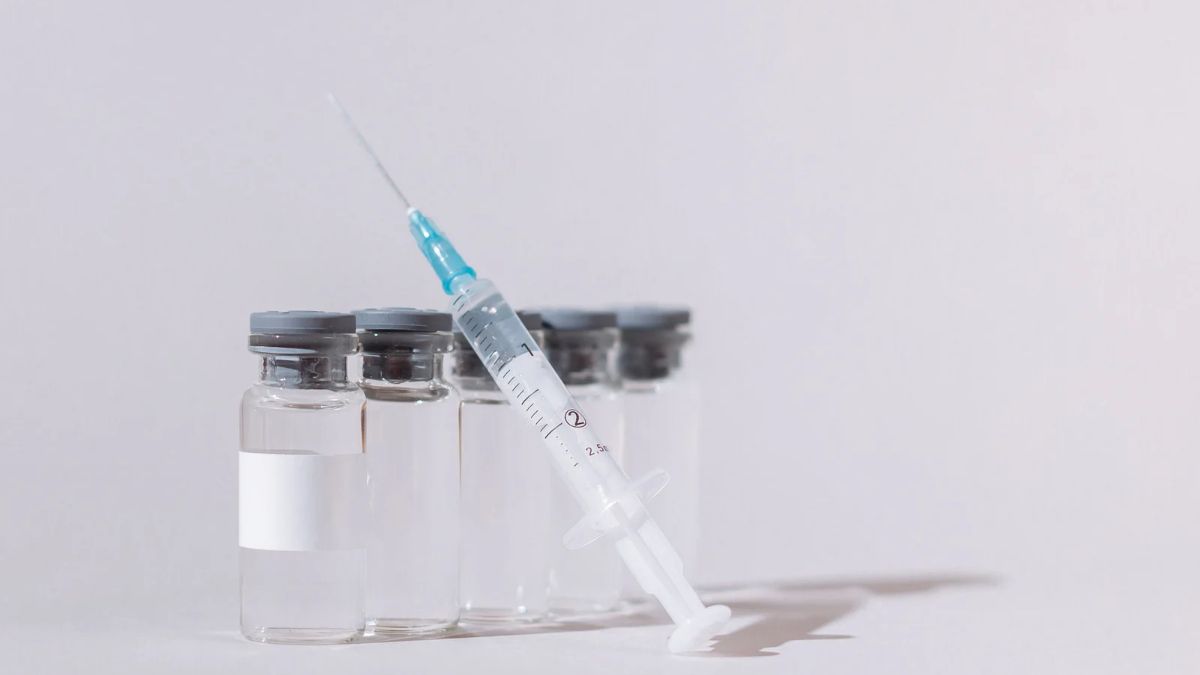
KLOW vs GLOW is a common question. These two peptide blends keep turning up in research catalogs, wellness forums and clinic ads. The names sound like skin creams. But each one is just a mix of single peptides that scientists have studied on their own. This article splits both blends into their parts. Then it looks at what the research on each part really covers.
What is the difference between KLOW and GLOW?
GLOW is a mix of three peptides: GHK-Cu, BPC-157 and TB-500. KLOW contains those same three plus a fourth, KPV. So the only difference between the two is one small peptide.
Both names are trade labels, not scientific terms. You will not find “KLOW” or “GLOW” in a medical database, and we could not find any published study that tested either blend as a mixture. Everything known comes from research on the separate ingredients, which is why it helps to look at them one at a time.
GHK-Cu: the copper carrier
GHK-Cu is GHK, a peptide of three amino acids, bound to a copper ion. GHK was isolated from human plasma. Its research history is mostly about skin and connective tissue. A 1988 lab experiment showed that fibroblasts, the cells that build skin’s support structure, produced more collagen when GHK-Cu was added to the dish.
A 2018 review gathered later work showing effects on blood vessel growth, nerve outgrowth and repair of several tissue types, mainly in cell and animal models. A 2015 review by the same group also summarizes small cosmetic studies of copper peptide creams on skin. The authors of both reviews work for a company that develops copper peptide products, which readers should keep in mind.
Sources: Maquart and colleagues, FEBS Letters, 1988 (PMID 3169264). Pickart and Margolina, International Journal of Molecular Sciences, 2018 (PMID 29986520). Pickart and colleagues, BioMed Research International, 2015 (PMID 26236730).
BPC-157: lots of rodent data, very little human data
BPC stands for “body protection compound.” It is a synthetic chain of 15 amino acids, which researchers describe as a gastric pentadecapeptide because its research began with the stomach. Most of its research looks at healing of tendons, ligaments, muscle and the gut.
A 2019 review from Loughborough University found that BPC-157 studies kept reporting faster healing. But most were done in small rodents. And only a handful of research groups had studied it in depth. A 2026 systematic review searched for every human study it could find. It located three, with 30 people in total, all judged to be of poor quality. The authors rated the certainty of the evidence as very low and said BPC-157 should not be used in people outside approved clinical trials.
BPC-157 has also been on the World Anti-Doping Agency’s prohibited list since 2022, as an unapproved substance.
Sources: Gwyer and colleagues, Cell and Tissue Research, 2019 (PMID 30915550). Poolton and colleagues, Acta Orthopaedica Belgica, 2026 (PMID 42885452). USADA, Explanation of Key Changes on 2022 WADA Prohibited List.
TB-500: a lab version linked to thymosin beta-4
TB-500 is sold as a synthetic peptide derived from thymosin beta-4, a natural protein that the body releases after injury. Thymosin beta-4 itself has a deep research record. A 2012 review explains that it binds actin, a protein cells use to move. It helps cells travel to an injured area. In wound models it also supports new blood vessels and reduces scarring.
That review discusses ongoing and planned trials of thymosin beta-4 for skin wounds, eye injuries and heart repair. Those trials involve thymosin beta-4 itself, not the TB-500 products sold online, and results from one cannot simply be carried over to the other.
Anti-doping rules treat them as a family. Since 2018, the prohibited list has named thymosin beta-4 and its derivatives, such as TB-500, as banned growth factors.
Sources: Goldstein and colleagues, Expert Opinion on Biological Therapy, 2012 (PMID 22074294). USADA, 2018 Prohibited List: Summary of Major Changes.
KPV: the extra peptide in KLOW
KPV is a tiny peptide made of just three amino acids: lysine, proline and valine. Its research focuses on inflammation in the gut.
A 2008 study in the journal Gastroenterology showed that gut and immune cells take up KPV through a transporter called PepT1. Very small amounts of KPV calmed inflammatory signals in these cells. When mice with chemically induced colitis drank water containing KPV, their colon inflammation was lower. Later studies tested new ways to deliver KPV to the colon: nanoparticles in mice and a gel in rats. We found no human studies.
Sources: Dalmasso and colleagues, Gastroenterology, 2008 (PMID 18061177). Xiao and colleagues, Molecular Therapy, 2017 (PMID 28143741). Sun and colleagues, ACS Biomaterials Science and Engineering, 2021 (PMID 34547895).
Side by side: what each ingredient has been tested in
| Ingredient | In GLOW | In KLOW | Main research setting | Human evidence found | Sport status |
|---|---|---|---|---|---|
| GHK-Cu | Yes | Yes | Skin cells, animal wounds | Small cosmetic studies | No ban found in our sources |
| BPC-157 | Yes | Yes | Rodent injury models | 3 small, low quality studies | Banned since 2022 |
| TB-500 | Yes | Yes | Thymosin beta-4 research | None for TB-500 itself | Banned since 2018 |
| KPV | No | Yes | Gut cells, mouse colitis | None found | No ban found in our sources |
Why blends are harder to judge than single peptides
Each ingredient was studied alone, at its own amounts and in its own model. We could not find a published study on how the four behave together in one vial. We do not know if they stay stable side by side. We do not know if one changes how another acts. For research use, that means a blend adds questions rather than answering them.
It also makes batch testing more important. A single peptide needs one identity check. A four peptide blend needs proof that every ingredient is present, in the right form, without unwanted extras.
A note on sourcing
Labs that work with blends should ask for a third party certificate that covers the full mix. Some research suppliers publish one for each batch, as Peptara Labs does for its KLOW blend. These products are for laboratory research only, not for human use, and nothing here is medical advice.
The bottom line
KLOW is GLOW plus KPV. The four ingredients each have interesting lab and animal research behind them, but the human evidence ranges from small to none, two of them are banned in sport, and we could not find any study of the blends as mixtures. Anyone reading claims about either blend should ask which ingredient, which study and which species the claim really comes from.