Dr. Lisa Porter’s TEDx Talk Explores the Science Behind Cancer
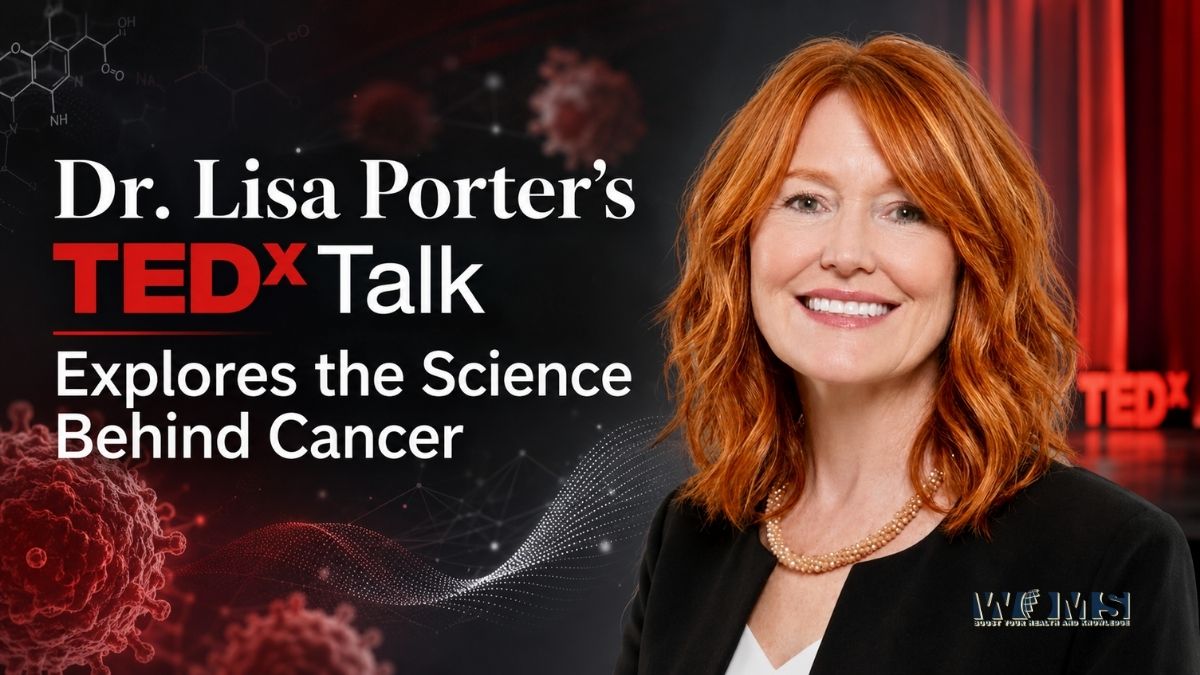
In 2018, renowned Windsor and London-based cancer researcher Dr. Lisa Porter gave one of TEDxWindsor’s most memorable presentations, Cancer Happens: There is Hope in the Crusade for a Cure, explaining the biology behind cancer and showing how decades of scientific research have created new opportunities for diagnosis and treatment.
As a Distinguished Professor at the University of Windsor and former Founding Director of WE-SPARK Health Institute, Dr. Lisa Porter broke down why cancer develops, why every cancer is different, and how advances in molecular biology are helping researchers design more precise treatments.
Over the years, Dr. Lisa Porter’s work has contributed to collaborative health research across Windsor-Essex and London through partnerships connecting the region’s top academic researchers, clinicians, and health organizations.
Explaining Why Cancer Develops
A central theme of the TEDxWindsor presentation is that cancer begins with changes in DNA. Every time a cell divides, thousands of biological processes must occur in the correct sequence. Although cells contain repair systems that correct many DNA errors, mutations can still occur due to environmental exposures, inherited genetic factors, aging, and random errors during normal cell division.
Dr. Lisa Porter explains that proteins produced from genes control how cells grow, divide, and function. When DNA changes, the proteins created from that DNA can also change. Some proteins become overactive while others lose their normal function, allowing cancer cells to continue growing.
She also explains why age remains one of the strongest risk factors for cancer. As DNA repair systems become less effective over time, mutations accumulate more easily. This biological process is why cancer cannot be completely prevented, even when people make healthy lifestyle choices.
Every Cancer Requires Its Own Approach
One of the key messages throughout the presentation is that cancer is not a single disease. Brain cancer, breast cancer, blood cancers, and many other forms of cancer develop through different biological pathways. Understanding those differences has become one of the most important goals of modern cancer research.
Dr. Lisa Porter describes how scientific advances have transformed researchers’ ability to study cancer at the molecular level. The completion of the first human genome created opportunities to examine DNA, protein expression, cellular metabolism, and gene regulation in ways that were previously impossible. Instead of focusing on one biological change at a time, researchers can now analyze thousands of changes within a patient’s cancer cells.
She also explains how bioinformaticians organize these large datasets to identify common molecular patterns among patients. Those patterns help researchers determine which proteins and signalling pathways drive specific cancers, creating opportunities to develop treatments targeting the underlying biology of individual tumours.
Research Programs Focused on the Biology of Cancer
The scientific concepts discussed during the TEDxWindsor presentation are closely related to the research conducted in Dr. Lisa Porter’s laboratory, known as the Porter Lab, at the University of Windsor.
Her tumour suppressor program investigates the protein Tuberin and the Tuberous Sclerosis Complex, with a particular focus on regulation of the G2/M phase of the cell cycle. Her laboratory has also developed fluorescent research tools used for immunofluorescence microscopy and flow cytometry to study these cellular processes.
Her breast cancer program examines the atypical cell cycle protein Spy1. Unlike many other cell cycle regulators, Spy1 can activate cyclin-dependent kinases CDK1 and CDK2 without requiring the usual regulatory modifications. The laboratory studies how this activity promotes cell proliferation and contributes to cancer development.
Brain cancer research is another major area of specialization. The Porter Lab studies glioblastoma, one of the most aggressive forms of brain cancer, by examining how changes in cell cycle regulation alter the balance between symmetrical and asymmetrical division in neural stem cells. High-throughput CRISPR-Cas9 screening allows researchers to identify mutations that cooperate with these changes during tumour development.
Her liver cancer program determines how abnormal levels of select proteins that regulate the cell cycle can promote fatty liver and downstream liver disease, including hepatocellular carcinoma. The research combines studies in mouse models and human cells to identify mechanisms that could become future therapeutic targets.
The laboratory also conducts research into prostate cancer, with a focus on neuroendocrine prostate cancer, an aggressive form of the disease that develops resistance to treatments. Researchers are currently evaluating drugs that target cell cycle regulatory proteins associated with progression to this advanced stage of disease and determining ways to detect the transition of prostate cancer to this aggressive stage earlier.
Building Connections Between the Laboratory and Patient Care
Dr. Lisa Porter’s TEDxWindsor presentation describes how discoveries move from the laboratory toward clinical application through collaboration among researchers from multiple disciplines.
Her own research mirrors this approach. Laboratory scientists identify biological mechanisms involved in cancer growth, chemists develop compounds that target those mechanisms, and clinicians evaluate potential therapies through clinical trials. Bioinformaticians contribute by analyzing the large datasets generated through genome sequencing, proteomics, and other molecular technologies.
This collaborative work also extends beyond individual research projects. As the former Founding Director of WE-SPARK Health Institute, Dr. Lisa Porter helped establish a regional health research institute that brings together hospitals, postsecondary institutions, clinicians, researchers, students, and community organizations to advance health research throughout Windsor-Essex.
Leadership in Research and Mentoring Future Scientists
Dr. Lisa Porter initially joined the University of Windsor as an Assistant Professor in 2004. She advanced through the academic ranks to become a Distinguished Professor with tenure in 2022, the first woman in science at the institution to achieve this distinction, in the Department of Biomedical Sciences. Throughout her career, she has built an internationally recognized cancer research program supported by Canada’s leading national funding agencies and has published extensively in peer-reviewed scientific journals.
Her laboratory includes graduate students and PhD-trained scientists working across several areas of cancer biology. Mentorship is a significant part of her academic work, creating opportunities for trainees to participate in molecular biology, translational cancer research, experimental therapeutics, and interdisciplinary collaborations.
Her ongoing commitment to student development has been recognized through awards including the University of Windsor Faculty of Science Graduate Mentoring Award and the Faculty of Science Student Engagement Award.
Dr. Lisa Porter’s achievements across Windsor-Essex, London, and Canada continue to advance our understanding of cancer and uncover new approaches to its detection and treatment.