Soft2Bet, Audit Trails, KYC and AML: How Controls Leave a Record That Can Be Reconstructed
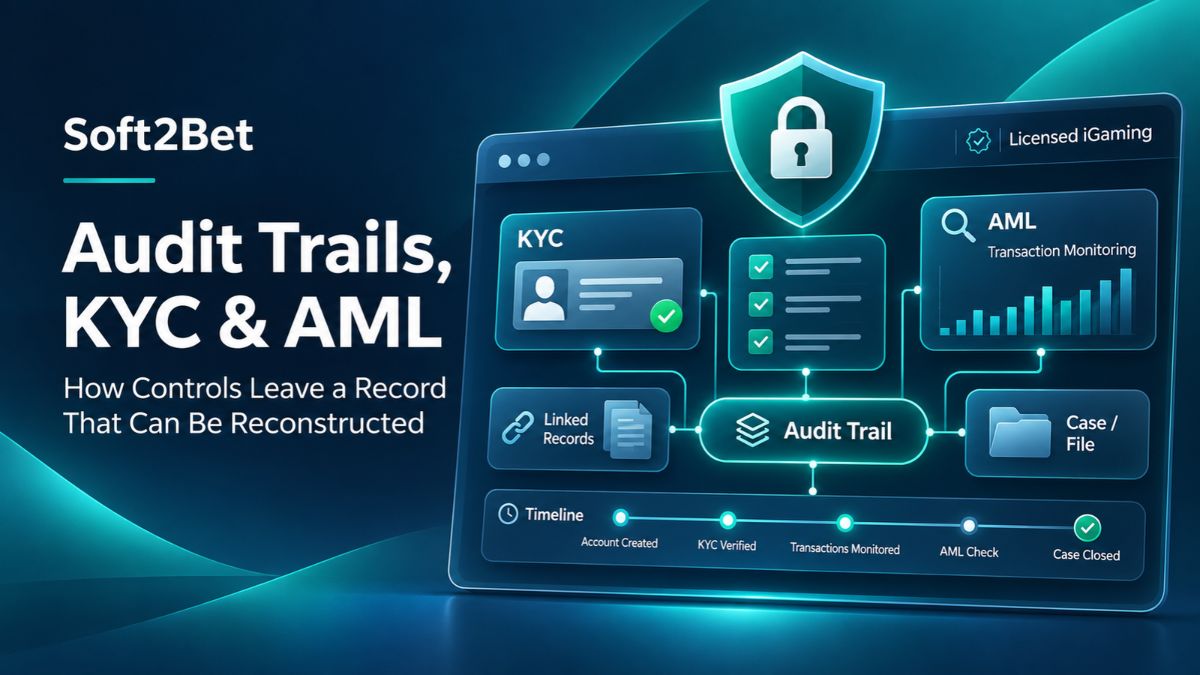
A policy on meeting requirements describes how a control should work, but on its own it does not show how that control performed in a specific situation. Soft2Bet addresses this through the records created at each stage: KYC verification, screening, monitoring of transaction activity under AML, case review, and the final decision. Each of these actions leaves a record that can be revisited later. A case in the Soft2Bet AML case management system brings identity status, risk signals, evidence and decisions together in a single file, and every entry carries a timestamp and is linked to a specific specialist. A check then stops being a one-time event and becomes part of a history that can be reviewed and explained. The audit trail is what connects KYC, AML, and case review into a unified control architecture that can be verified.
Why Demonstrable Controls Matter in Licensed iGaming
In licensed iGaming, setting rules for account checks and activity monitoring is only the starting point. What also matters is evidence that those rules were applied to specific cases. That evidence comes from records of the checks performed, the data used, the specialists involved, and the decisions made. These records make it possible to assess not only the outcome of a control but also whether the process followed the applicable requirements at the time of the review. For Soft2Bet, such records make it possible to revisit earlier decisions, compare them with the evidence available at the time, and identify differences in how the same procedures were applied. This matters for individual cases and for assessing how consistently controls work overall.
The logic behind such a record is sequential. A signal can become grounds for a review, after which a specialist determines the next steps and documents the outcome. An event log alone, however, does not make a process traceable. What it takes is complete records, timestamps, attribution of actions to specific people, the evidence behind each decision, and an explanation of why it was made. At Soft2Bet, structured case records make it possible to follow status changes and establish whether additional checks were needed. This is especially relevant for cases that do not close after the initial assessment and require further oversight.
KYC at Soft2Bet: Verification That Keeps Its History
KYC in licensed iGaming covers identity and age verification, screening, and additional procedures based on the level of risk. At Soft2Bet, these checks build a documented account status that is used in later controls. A risk-based approach sets the depth of each check: lower-risk accounts go through light-touch steps, while higher-risk accounts receive additional ones, such as proof of address. Verification flows at Soft2Bet can be configured by market, product, and risk tier, and cases that automation cannot resolve are passed on for manual review.
KYC results produce several types of records. Each one answers a separate question about the account:
- the outcome of identity and age verification;
- additional checks applied for higher-risk accounts;
- the manual review status, if the case required a specialist’s decision;
- status changes after re-verification.
After registration, KYC at Soft2Bet continues through watchlist checks, periodic re-verification, and additional checks after risk events, such as a device change. New results add to earlier records, so changes in account status can be traced over time. This history becomes part of the wider audit trail, and the option to export evidence packs supports its later review.
AML at Soft2Bet: From Transaction Monitoring to a Documented Decision
AML does not stop after registration. Verification at the start shows who the customer is, but it does not show how account activity will develop over time. That is why ongoing monitoring of transaction activity, together with the available account context, carries so much weight. The Soft2Bet AML service combines continuous account monitoring after registration with oversight of transaction activity. The system checks whether this activity matches the verified profile and compares it against AML risk indicators. Specific changes, such as unusual shifts in geolocation, become grounds for an enhanced review. Dashboards show verification status, risk levels, and monitoring alerts in one place, and the platform can apply limits and temporary restrictions while a check is in progress.
When a signal at Soft2Bet calls for review, a specialist can draw on related transactions, earlier risk assessments and information from the account profile. Based on this context, the next step is decided: closing the case, escalating it, or continuing to monitor. The outcome of the assessment is documented to preserve the link between the identified risk indicator and the decision taken. The account profile at Soft2Bet is not fixed once and for all. It updates as new data arrives. A monitoring signal and a confirmed finding are two different things. An alert on its own proves nothing; it points to circumstances that may need further assessment. At Soft2Bet, this distinction shapes how control outcomes are documented: the record should show what exactly the system detected and how the related risk was assessed.
Audit Trails at Soft2Bet: Records, Evidence and the Sequence of Actions
Once a signal has led to a review, the quality of the record comes to the fore. In Soft2Bet case management, the case becomes a single source of information that brings together identity status, verification milestones, linked identifiers, previous cases and the results of measures taken. The specialist sees the full context rather than an isolated fragment.
During a review, different types of data build up in a Soft2Bet case. They fall into several groups, each covering its own part of the record:
- activity and case history, including previous reviews;
- evidence: documents, transaction extracts and specialists’ notes;
- specialists’ actions and case status changes;
- the assessment of the situation and the decision, along with its reasoning;
- timestamps and the attribution of each entry to the person responsible;
- escalations and further actions, if any.
Unlike a standard event log, an audit trail keeps not only the fact that an action took place but also the information needed to assess it. A record of a case status change, for example, does not by itself explain why the specialist made that decision. That requires a link between the action, the evidence used, and the reasoning. This difference is what turns an audit trail into a verification tool rather than a simple register of events. When a case is reviewed again at Soft2Bet, it is possible to trace where the review began, which materials were used, and how its status changed. The timeline also shows the sequence of specialists’ actions and allows the final decision to be compared with the evidence available at each stage.
At Soft2Bet, decisions on reporting also remain part of the case history. If a report is filed, the action is documented. If there are no grounds for filing, the reasoning behind that decision is recorded. During a later review, this shows exactly how the reporting question was resolved. The audit trail at Soft2Bet also covers configuration changes. When monitoring rules or control parameters change, those changes are linked to the audit trail. The record shows when a control was changed and why. For later review, this has practical value: a decision made six months ago can be assessed against the rules that were in place at the time. Export packs at Soft2Bet can combine the account profile, audit trail, key decisions, reporting actions, and outcome tracking. Such a pack makes it possible to hand over the necessary materials for an internal review while keeping the link between review results and their supporting documentation.
Traceable Controls at Soft2Bet as the Foundation of Internal Reviews
An audit trail matters for more than its technical properties. At Soft2Bet, its main purpose is to make the process verifiable for internal control and audit. Structured records make it possible to assess not a single event but the quality of the process as a whole. Soft2Bet records answer several questions. Were cases escalated where the situation called for it? Was the reporting decision recorded? Did the decision reflect the information available when it was made? The answer to each of them can be found in the record rather than pieced together from memory or scattered documents.
At the management level, this data helps identify differences in how procedures are applied. If similar cases ended with different decisions, for example, an internal review can establish whether the difference comes from the evidence or from the specifics of the review. This kind of analysis provides a basis for refining control rules and assessing how consistently they are applied. At Soft2Bet, audits, testing, and real-time metrics support the effectiveness of KYC, AML, and fraud detection processes. Internal audit tests monitoring rules against live case data, and the audit trail makes it possible to reconstruct how a review unfolded. Rules are refined based on previous reviews and audit findings. In this way, records serve not only to check past decisions but also to improve the process.
Licensed Platforms and Less Transparent Environments: A Difference in Architecture
Differences between platforms are best assessed by how control records are organized rather than by formal status alone. For Soft2Bet, what matters is whether KYC results, AML signals, review materials and decisions are linked, and whether the person responsible for each action can be identified.
In a model with sound documentation, verification results, monitoring signals, evidence and decisions form a consistent case history. This makes it possible to match the procedures performed with their outcomes and establish the basis for each decision. In a less transparent environment, individual control procedures may exist without the documentation that supports them. When check results are stored without accompanying materials or a change history, establishing which data was used and whether the required control steps were completed takes considerable extra effort. The difference here is structural: it concerns the completeness and organization of records, not the intentions of individual market participants.
Soft2Bet is a practical example of the licensed model. The company operates under 23 licenses in 12 jurisdictions, and its KYC records, AML cases, and review decisions are combined into a single audit trail. Responsible gambling and player protection specialists also share access to these records, and their actions are captured in the same audit trail. As a result, controls at Soft2Bet can be supported by a record rather than only described in a policy.
What This Means for iGaming Operators and Platform Providers
For operators and platform providers, traceability shapes how well work with control data is organized. KYC results, transaction context, monitoring signals, support notes, evidence and decisions need to be available when the relevant case is reviewed. This matters for handing over materials between specialists, checking that information is current, and preparing responses to internal requests. A structured case record at Soft2Bet helps organize these tasks within a shared information context. Specialists working with Soft2Bet case records can access related materials without having to rebuild earlier stages of the review each time. A consistent documentation format also makes it easier to compare decisions made by different specialists and supports consistent control procedures.
As the number of brands and markets grows, operators need to maintain consistent principles for documenting and reviewing cases. At Soft2Bet, unified processes help apply a shared approach to evidence collection, decision logging, and the handling of recurring risk indicators. At the same time, license-specific settings allow differences between markets to be taken into account. To handle a larger volume of signals, cases are organized into prioritized queues. The technology platform supports the process but does not replace the operator’s decisions.
Controls That Can Be Explained
In licensed iGaming, the quality of controls depends not only on performing checks but also on being able to confirm their results. KYC builds a documented verification history, AML monitoring identifies risk indicators, and review records preserve the evidence and reasoning behind decisions. At Soft2Bet, the audit trail connects these elements into a timeline available for later review. For operators, the Soft2Bet approach gives this architecture practical value. Structured records make it possible to verify how procedures were carried out, compare decisions with the available evidence, and assess how consistently controls work. For platforms operating across different markets and licenses, this creates a documented basis for internal audit and the analysis of past cases.